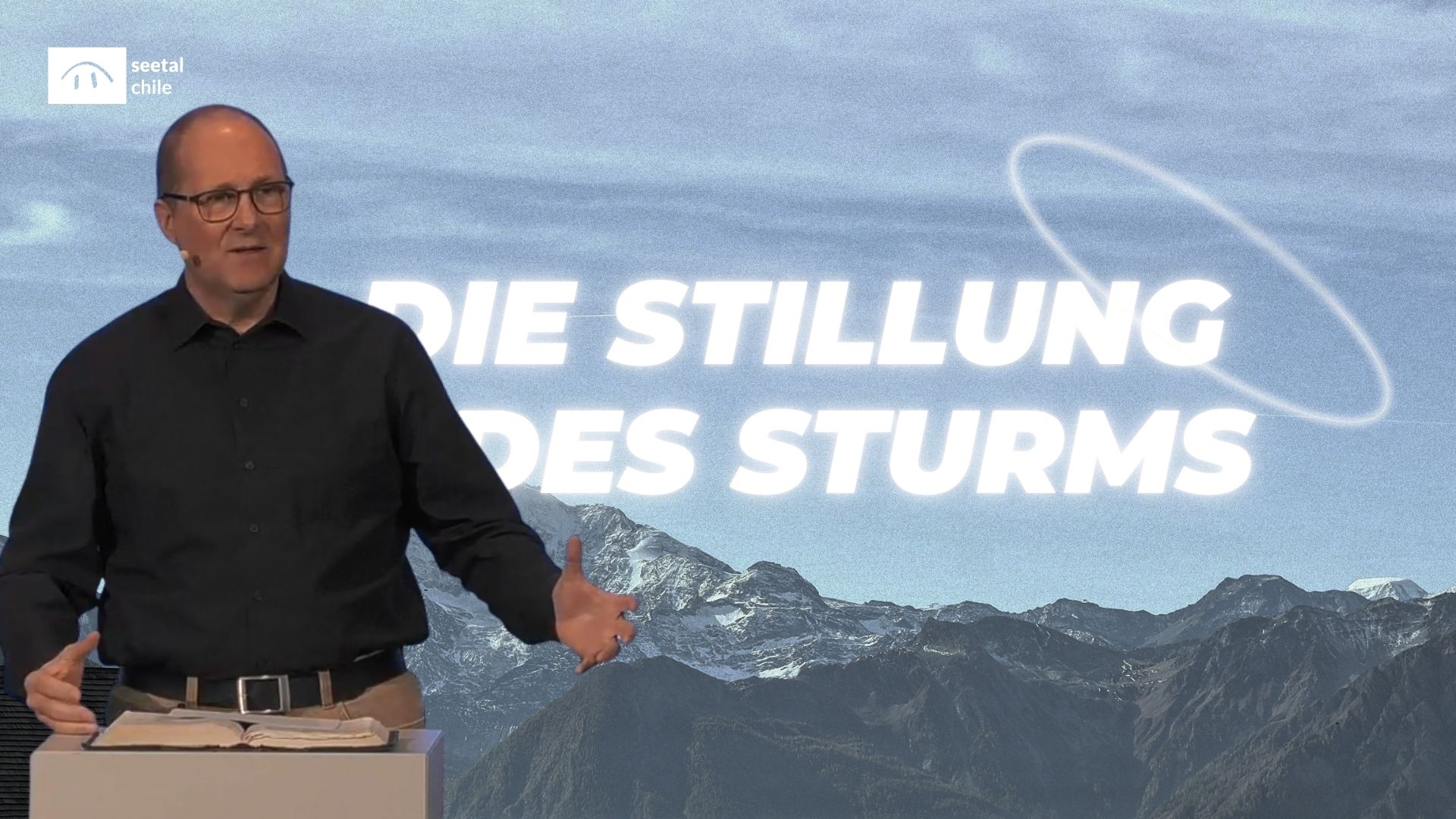
Fasting | As God loves it
Series: Simple. Quiet. Present. | Bible text: Isaiah 58:1–14
What if we fast – and God still says: Not like this? In Isaiah 58, God puts a big «if» in front – and combines it with powerful promises of light, healing and inner abundance. There is a fast that remains ineffective – and one that makes our lives blossom like a watered garden. The question is not whether we do without, but whether our heart is really in tune with God’s heart.
Today we come to the fourth and final sermon in the series on fasting. Up until now, we have been thinking about why fasting at all. Fasting as a path to personal sanctification. Fasting in connection with prayer. Today it is about fasting in a way that is pleasing to God. We will immerse ourselves in the text that we have already heard in the text reading.
Fasting & prayer in challenge
People celebrate a service that includes fasting, but it does not please God! «[…]. You are not currently fasting in such a way that you could make your voice heard in heaven» (Isaiah 58:4 NLB). This statement means that by fasting we can make our voice heard in heaven! But there is an «if» that is important. There is one promising «if» throughout Isaiah 58. This is followed by five «then». The big «if» is found in verse 8. «If you act like this [fasting as God loves it], your light will shine like the dawn. Your healing will make rapid progress. Your righteousness will precede you, and the glory of the Lord will follow you» (Isaiah 58:8 NLB). These promises are addressed to the whole nation of Israel, but they also include the individual. The third «then» promise is extremely powerful. «Then the Lord will guide you continually and keep you content even in times of drought. He will refresh your body so that you will be like a garden that has just been watered and like a spring that never runs dry» (Isaiah 58:11 NLB). The fruit is that God will keep inner contentment in times of drought – in lack, hardship, oppression, fleeing, nakedness and captivity. God will refresh our bodies. Literally it says «bones». God will revive what is seemingly dead. In a watered garden, it germinates, sprouts and thrives. It is a sign that we receive abundantly. The never-failing spring points to the abundance that God gives.
What is this «if»? What does such a service look like? «On my holy day, the Sabbath, do not do what you want, but experience it as a delight and honour the holy day of the LORD. Honour it, do not pursue your own interests, do not go about your business and spare yourselves idle chatter» (Isaiah 58:13 NLB). It’s about not doing what we want. So not doing something good for the best (work, family, success, busyness, prestige in front of people), but putting God first. To make fulfilment and security dependent on him and not on anything else. A worshipper who puts God first gives his whole life to God and tries to harmonise speech and action.
Act - as God loves it
What does such action that corresponds to God look like? «Fasting, as I love it, looks more like this: Release the unjustly imprisoned and let go of those you have subjugated. Release the oppressed. Break every yoke. I want you to share your food with the hungry and give hospitality to the homeless. If you see a naked man, clothe him. Do not deny your own flesh and blood» (Isaiah 58:6–7 NLB).
If we understand Isaiah 58 to mean that fasting as such is not important, there is still a great discrepancy between living worship and caring for the poor and oppressed. As a follower of Jesus, everything I do or don’t do is worship – my whole life! Worship is not limited to Sunday morning. Some people don’t like to hear about caring for the poor and oppressed and immediately put the label «left-wing church» on you. But this label doesn’t help. Because God always orders care for the poor and oppressed. «He who oppresses the poor insults his Creator, but he who helps the poor honours God» (Proverbs 14:31 NLB). God does not say: Take care of the influential, those who are doing well. Because they can stand up for themselves. Followers of Jesus are to stand up for those who cannot stand up for themselves. Followers of Jesus are invited to stand up for equal treatment. Followers of Jesus are invited to speak up for those who are not heard. Followers of Jesus are invited to live a generous lifestyle. Jesus says: «[…] I assure you: Whatever you did for one of the least of these brothers and sisters of mine, you did for me!» (Matthew 25:40 NLB).
What does it mean if we understand Isaiah 58 to mean that fasting still has its place? Fasting is then a way of opening up access to those who do not have enough food. I can perhaps imagine a little better what it is like when meals are cancelled. It opens up the opportunity to be active in my own environment. For example, I can pass on the money I have saved that I don’t need for meals. Fasting can have a strengthening effect because I experience it on my own body. But it’s not about fasting as a practice in and of itself. Fasting is not suitable for certain groups of people. According to a recent SRF documentary, this applies to people with cachexia, anorexia, hyperthyroidism, liver or kidney insufficiency, type 1 diabetes and pregnant and breastfeeding women. Conscious abstinence could be a good alternative here. Because it’s not about fasting as such, but about the attitude of the heart behind it. If I want to honour God, then my worship (life) should reflect this. Fasting can be part of this worship.
But how do we get to the point where we not only have compassion, but mercy? I still like Harry Graf’s definition, which he gave here some time ago, best: «Mercy is having pity on someone when they themselves are to blame! The invitation follows: «Open your heart to the hungry and help those in need. […]» (Isaiah 58:10 NLB). How do we get there?
The beauty of the Gospel
This is not about «blaming», as happens on social media all too often. But it is also not about appearing to be in front of others, as is also done frequently. Moral appeals don’t get us anywhere either. If opening my heart is something I have to do, then it is ultimately just self-centredness. But if I open my heart because I have grasped the beauty of the gospel, then it leads me away from myself and towards God.
The role model for our approach is none other than Jesus Christ himself. Jesus Christ identified with the poor – more than just literally standing up for them. «You know the great love and grace of Jesus Christ our Lord. Although he was rich, he became poor for your sake, so that through his poverty he might make you rich» (2 Corinthians 8:9 NLB). Jesus himself was poor for our sake. He was born in a stable – on the margins of society. At the obligatory purification sacrifice after a birth, his parents offered the minimum sacrifice: two doves. This was prescribed for poor people (Luke 2:22–24). Jesus grew up in an area where nothing of significance was expected (John 1:46). He cared a lot for the poor, the oppressed and the weak and healed them. He met prostitutes and the hated tax collectors with love. Above all, he had quarrels with the religious leaders. In the end, he died on a cross outside the city. He was buried in someone else’s grave.
Which Jesus do you follow? One who cares about the poor and the oppressed and invites people to follow him personally? Or a westernised version of it? Our worship (life) shows the difference. It is not about the action itself. Because the action comes from the relationship with God and has its origin there.
Isaiah promises something grandiose about the service of God, the Sabbath: «Do not do what you want on my holy day, the Sabbath, but experience it as a delight and honour the holy day of the LORD. Honour it, do not pursue your own interests, do not go about your business and spare yourselves idle chatter. Then the LORD will be your joy […]!» (Isaiah 58:13–14 NLB). Delight is the feeling of happiness, the highest joy. Do you long for it? The only way to achieve it is to stop pursuing your own interests and make your security and fulfilment dependent on God. Invite God to show your heart what is important to him. Fasting can be a way to do this. But fasting is about more than just the outward act of fasting. The whole topic of fasting is not about pleasing God because I am fasting, but about spending time with Him. I would like to end the sermon again with the prayer that I used in last year’s sermon series on possessions and faith: «Lord, show my heart what is important to your heart. Amen.»
Possible questions for the small group
Read the Bible text: Isaiah 58
- Where in my own life do I recognise the danger of «ineffective fasting» – that is, outward piety without an inner attitude of heart?
- In Isaiah 58, God combines an «if» with powerful «then» promises.
What does this «if» mean in concrete terms for my everyday life – beyond religious acts? - «Then your light will shine […]» (Isaiah 58:8 NLB). Where do I long for healing, guidance or inner contentment – and what might it mean to put God’s priorities first there?
- God describes fasting as a commitment to the hungry, the oppressed and the needy (Isaiah 58:6–7). Which specific person or group might God be laying on my heart right now? What could a first step look like?
- Jesus said: «[…] Whatever you did for one of the least of these brothers and sisters of mine, you did for me» (Matthew 25:40 NLB). How does this view change the way I deal with difficult, stressful or «self-inflicted» people?
- The role model is Jesus Christ, who «was rich and became poor» (2 Corinthians 8:9 NLB). Where does his lifestyle challenge me – perhaps in my handling of possessions, time or reputation?
- When God promises: «Then the LORD will be your joy […]» (Isaiah 58:14 NLB): What do I currently make my joy and security dependent on – and how could real joy in God grow in concrete terms?