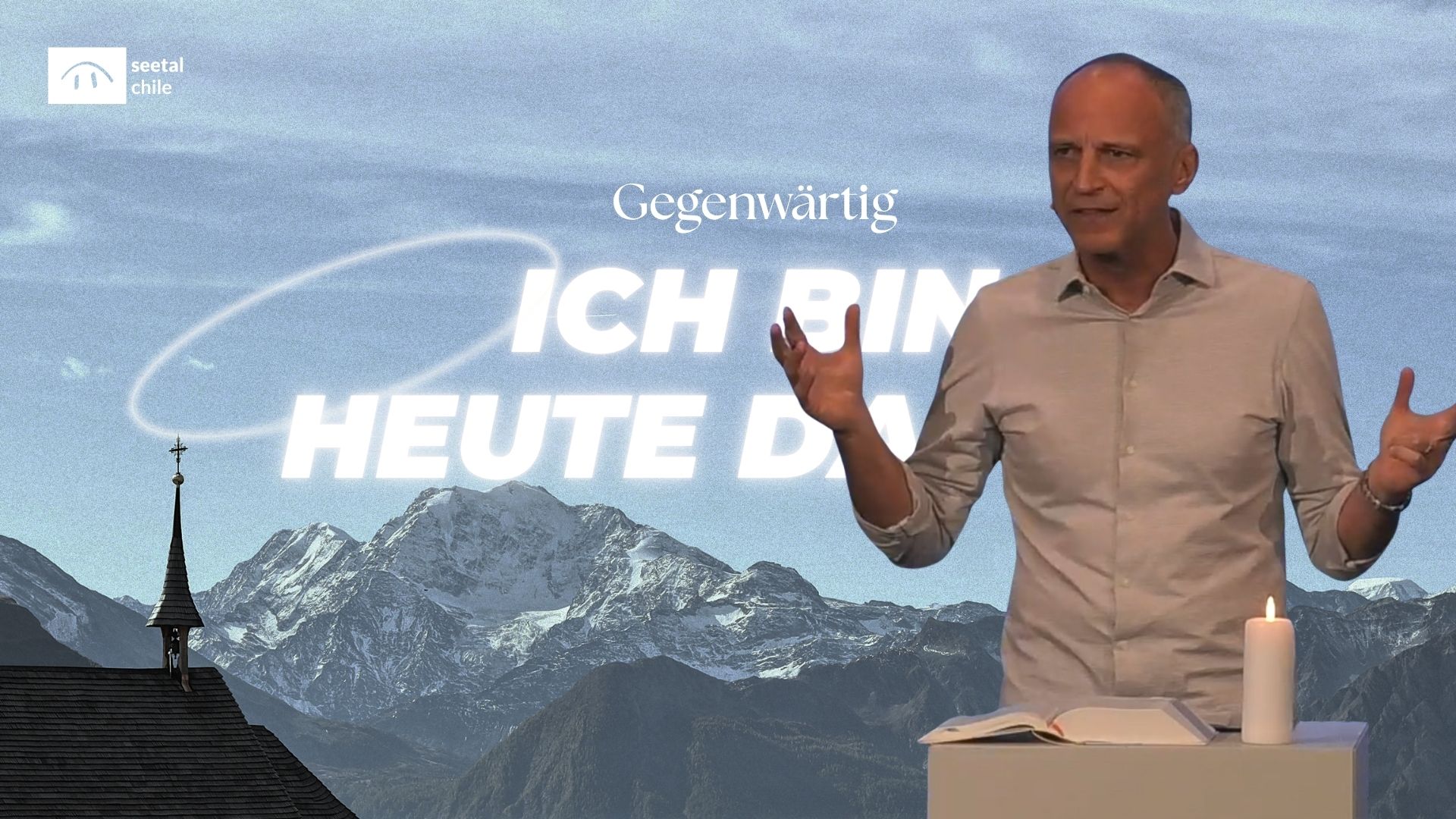
The Habits of Jesus | Bible Reading
Series: Simple. Quiet. Present. | Bible text: Philippians 4:8
Reading the Bible often stirs up mixed feelings – ranging from a guilty conscience to a genuine longing for more. Jesus himself was deeply rooted in the Word of God and invites us to encounter God in it and to allow ourselves to be shaped by him. It is not about performance, but about finding joy in it, immersing ourselves in it, reflecting on it and making space for God’s voice in our daily lives. At the same time, the Bible’s message challenges us to look at things honestly – so that it is not merely read, but lived out.
During a chat in the office, we realised that reading the Bible should be part of Jesus« daily routine. I was immediately enthusiastic. In this context, I mentioned my boys, who enjoy reading the Bible. To make sure I wasn’t telling you – or anyone in the office – anything wrong, I checked straight away over lunch after the discussion. I asked, »Lads, do you enjoy reading the Bible?«, and both of them shot back straight away: »No.’
The subject of reading the Bible is often associated with feelings of guilt. I don’t want to make you feel guilty. My aim is to make you «crave» more after today’s sermon – just as the honey on your finger might have made you «crave» more.
Why read the Bible?
Here are four reasons why, as a follower of Jesus, it is worth reading the Bible:
Because Jesus did it!
In this series of sermons, we explore the habits of Jesus – and that is also the main reason: as the Son of God, Jesus himself is deeply rooted in them. The Bible, the Torah, could only be found in the synagogue at that time. «When he came to Nazareth, where he had spent his childhood, he went, as was his custom, to the synagogue on the Sabbath and stood up to read from the Scriptures» (Luke 4:16 NLB). In Jesus’ time, much was passed on orally rather than in writing. People had committed large parts of the Holy Scriptures to heart. When Jesus spoke about the Word of God, it made a deep impression: «They said to one another, »Didn’t our hearts burn within us whilst he was talking to us on the road and explaining the Scriptures to us?”’ (Luke 24:32 NLB).
So that we may do what we see the Father doing!
The aim of following Jesus is to act as Jesus did. Yet Jesus himself says: «Jesus replied, ‚I tell you the truth: the Son can do nothing of his own accord. He does only what he sees the Father doing. Whatever the Father does, the Son does likewise.‘» (John 5:19 NLB). That is why it is worth reading it: «When I read the Bible, I catch God red-handed» (unknown).
Because we trust in Jesus!
We do not believe in Jesus because we trust the Bible; rather, we trust the Bible because we trust Jesus. That is why we trust that the Bible is true. Then it is not difficult, but rather: «[…] The laws of the LORD are true; every one of them is just. They are more precious than the finest gold and sweeter than the finest honey. They are a warning to all who hear them, and a rich reward awaits those who obey them» (Psalm 19:10–12 NLB).
Because God’s Word is powerful!
There are words that have an effect. This is known as performative language – for example, words of blessing or the words spoken when a contract is concluded. The Word of God, the Bible, is also one such powerful word: «So it is with my word that comes from my mouth. It will not return without fruit, but it will do what I want and fulfil what I have sent it for» (Isaiah 55:11 NLB). The history of the Church is full of examples of people who, through reading the Bible, came up with good ideas and served those around them.
Ultimately, we read the Bible because we want to fill our minds with good things: «And now, dear friends, let me say one last thing: focus on what is true, honourable and just. Think about what is pure, lovely and admirable – things that deserve honour and praise.»(Philippians 4:8 NLB).
How should one read the Bible?
Here are four points on how we can read the Bible.
Just read it!
The best translation is the one you read! Whilst I was at university, I was asked to proofread the revised edition of *Hoffnung für Alle*. We were each assigned a set of books. I was given Matthew, Mark and Luke. So I read these books within two days. This gave me a completely new perspective and I saw the common thread running through them. Instead of reading, you can also listen to the Bible, for example using the YouVersion app. Begin your reading with an invitation to God. Your prayer might go something like this: ‘Lord, show my heart what is important to your heart!’ If, whilst reading, you come across something that annoys you, upsets you or you find offensive, I’d like to encourage you to see it as an invitation from the Holy Spirit and to explore it more deeply.
Dive in!
It is worth taking a closer look at certain passages. For although the Bible is for us, it was not written to us. The Bible was written in a different time and culture. It therefore makes sense to explore a particular topic or even the time of Jesus in general. I have recently been looking into Jewish culture at the time of Jesus and was shocked by how wrong my understanding had been.
Meditate!
Depending on your background, the word «meditation» may carry negative connotations, but it simply means reflection or contemplation. It refers to the practice of absorbing a Bible passage as one would honey: immersing oneself in it, taking it to heart, reading it several times, reciting it, and turning it over in one’s mind. With a good meal, it’s worth chewing several times. This improves nutrient absorption, as the enzymes in saliva begin to break down carbohydrates. It helps with weight control, as it takes 20 minutes for the brain to register the feeling of fullness. The flavours unfold to their full potential and enhance the taste experience. When we do the same with a Bible verse, this is what happens: «Taste and see how gracious the Lord is. Blessed are those who trust in him!» (Psalm 34:9 LUT).
Take it on board!
Another challenge might be to learn the verses by heart. But why on earth would anyone do that? So that no one can take them away from you! That’s how I experienced this with Psalm 23 in a tricky situation. «The Lord is my shepherd; I shall not want! […] You prepare a table before me in the presence of my enemies. […] Goodness and mercy shall follow me all the days of my life, and I shall dwell in the house of the Lord for ever.» (Psalm 23 LUT).
The dangers of reading the Bible?
There are two risks associated with reading the Bible that I would like to touch on briefly.
Misinterpretation!
In Luke 4, Jesus is challenged by the devil using verses from the Bible. The words are correct, but they are taken out of context. This happens time and again when we engage with the Bible! It is not always deliberate, but we all have a blind spot. We see this more clearly in history: certain actions were justified using the Bible’s message – the Crusades, colonisation, slavery in the USA, the oppression of women. Yet we, too, are not immune to this. Where is your blind spot today? In our theology, which is shaped by Western culture, I see the following blind spots: sexual ethics – Jesus is far more conservative than we realise – and in our attitude to possessions – Jesus is far more radical than we think.
No fruit!
Another major danger is that, although we study the Bible, it does not bear fruit. «You search the Scriptures because you think they can give you eternal life. Yet it is these very Scriptures that point to me! And yet you refuse to come to me so that I may give you eternal life» (John 5:39–40 NLB). Simply reading the Bible does not mean that we live that way! In all the habits we examine, the goal is Jesus himself. The same applies here!
What is the purpose of reading the Bible?
The aim is to increase my capacity for love by taking God’s words to heart and living by them. «You shall love the Lord your God with all your heart, with all your soul and with all your strength. Keep the commandments I am giving you today in your hearts» (Deuteronomy 6:5–6 NLB). The aim is to train our minds to react differently to danger, stress and challenges, so that we can resist temptation! This week I came across a video on social media. In it, sleeping US soldiers were tricked. Whilst they were asleep, someone shouted ‘Attention’ – do you know what happened? They jumped up and stood to attention. That’s how deeply ingrained this is in them.
Engaging with the Bible is an invitation to think, feel, see, speak and act more like Jesus. The following things might be worth trying: making time for and getting into the habit of reading the Bible. Simply read the Bible and ask God to speak to you. Or try varying your approach from time to time. All with the aim of becoming more like Jesus.
Possible questions for the small group
Read the Bible passage: Luke 4:1–21
- How would you describe your current approach to reading the Bible (e.g. regularly, occasionally, hardly ever)? What characterises your current practice – is it more a sense of joy, a sense of duty, uncertainty, or something else?
- Which of the four reasons for reading the Bible (Jesus did it, getting to know the Father, trust, its power) appeals to you most at the moment – and why that one in particular? Is there anything that challenges you or perhaps even causes you difficulty?
- If you consider the four ways of reading the Bible (reading, immersing yourself, meditating, internalising): which one feels most natural to you – and which one do you find most difficult? What, specifically, is the reason for this in your everyday life?
- Have you ever found that a Bible verse has specifically sustained, changed or challenged you in your everyday life? What happened at the time – and how did it make you feel?
- The sermon talks about «blind spots» and the danger of misinterpretation: in what ways might your view of the Bible be strongly influenced by your upbringing? How do you deal with it when a Bible passage confuses or challenges you?
- «No Fruit» – where do you experience the tension between knowledge and life? What would it actually mean to put a thought you’ve read into practice this week?
- What could be a very specific next step for you this week? (e.g. setting aside a specific time, trying a different method, learning a verse by heart, consciously inviting God to be with you as you read).