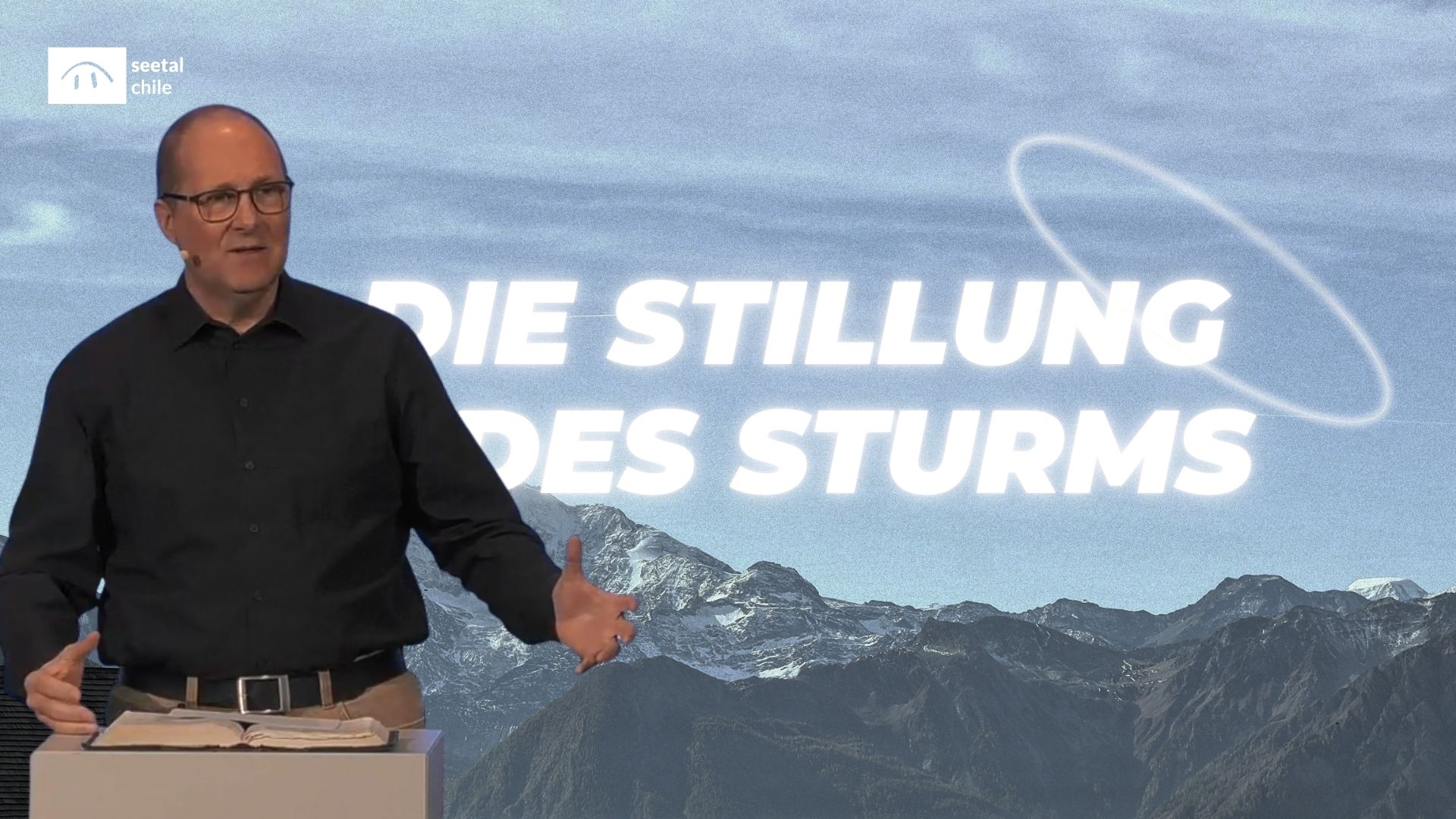
Work & Faith | Work as good news
Series: EIFACH muetig – with Jesus as a role model | Bible text: Romans 12:11
Work as good news means that my work is a form of worship to God. It is therefore orientated towards Jesus Christ. The motivation is no longer to shape work as a search for recognition and power, but as an expression of love for God and neighbour. Followers of Jesus have an inner compass that helps them to pursue their vocation at work. This provides a certain framework for work and helps them to serve both work and God.
Today is the third sermon in our «Work & Faith» series. We have taken a path from the dignity of work to work as more than performance to «Work as good news». Today’s sermon will include many examples from other people, as well as some quotes from people who have long since passed away. This is intended to show that the topic we are dealing with today is nothing new, but is part of a long tradition of reflections on «Work & Faith».
The gospel as a guide
The basis for seeing work as good news is the «good news» par excellence. Jesus Christ says: «I sanctify myself for them, that they also may be sanctified in the truth» (John 17:19 LUT). To sanctify means to devote oneself to God. Jesus did this like someone who wants to take part in the Olympics. He subordinated everything to this one goal. This is how Jesus worked towards the goal of redemption. It is the redemption of us humans from sin. In the area of work, it is a failure of purpose to worship work instead of doing it as worship. To worship Jesus Christ means not wanting to make a name for yourself. We humans cannot resolve the separation (sin) between God and man ourselves. Only Jesus Christ could do this. We must therefore place all our hope in him and not in ourselves. Every person has a world view in which they either deny Jesus Christ or deny themselves. If Jesus is followed, i.e. one denies oneself, then this leads to a new motivation for the work. The driving motives are no longer recognition and power, but love of God and neighbour. The gospel of Jesus Christ frees me from pride when I am successful and from fear when I fail. I have to live my vocation in my profession anew. In humility and integrity. In creativity and excellence. With compassion and a sense of justice.
In the text reading, we heard instructions to slaves and their masters. It became clear that followers of Jesus work because the heavenly Father, who loves them, is watching. They try to be salt and light in their work. In other words, to make a positive impact by following Jesus and thereby pointing people to Jesus Christ. This is not so much through evangelism, i.e. telling others the good news, but in the way they do their work. «What you do speaks so loudly that I can’t hear what you say» (Ralph Waldo Emerson). They make a difference through their character, their style of work and their contribution to the common good. It is about expressing gratitude to Jesus Christ through his life. That followers of Jesus have a name through him. A life that expresses gratitude towards salvation is better than a life of wanting to show how good you are.
It’s about combining work and faith. In Bern, I had made myself a to-do list, which had the following quote at the top: «You have to pray as if all your work is useless, and you have to work as if all your praying is useless» (Martin Luther). Doing your work as a follower of Jesus also means allowing yourself to be interrupted by people. Jesus always allowed himself to be interrupted. But he was never rushed. We are not Jesus, but we want to become more and more like him. When the meaning of life is at stake, we humans quickly panic. How great it would be if followers of Jesus were known for mercy, generosity, calm and composure in crises, interruptions or defeats. But why should they make a difference? Abraham Kuyper, Dutch theologian, former prime minister and academic, puts it like this: «There is not a square centimetre in the whole expanse of our human existence over which Christ, the sovereign Lord of all, would not cry out with the words: «Mine! (Abraham Kuyper). So I have a question for you: How can your work serve the well-being of people and justice as well as possible?
Inner compass
This is helped by an inner compass, which is guided by the Holy Spirit and therefore always personalised. «Do not slacken in your zeal, but let the fire of the Holy Spirit grow stronger and stronger within you. Serve the Lord» (Romans 12:11 New Testament). Zeal means: an exciting passion to do something or to achieve an end. Important: It is not us who bring this about, but we are to let the fire of the Holy Spirit grow stronger.
Eric Liddell took part in the 1924 Olympic Games in Paris. He did not run in his discipline, the 100 metre race, because it was on a Sunday, but he preached. His inner compass was set so that he reserved Sunday for God. Instead, he took part in the 400 metre race, where the races all took place on weekdays. He took part, won and even ran a new world record.
Following Jesus is about being guided by the wisdom of God. «Wisdom means that I know the right thing to do in the 80 per cent of life situations in which the moral rules do not give me a clear answer» (Timothy Keller). Faith gives you an inner moral compass, without which work can seduce you. Morality refers to the totality of values, standards and rules that judge people’s actions in terms of right and wrong. There is a lot of pressure in the world of work, and in today’s world morality has become relative. Without a stable inner compass, this is a major challenge.
How can you test yourself? One way is to think about what you are prepared to lie about. This reveals what is really important to you. For some jobs, there is the consideration of how I do them well because of my following Jesus. For other jobs, this is less important at first in order to do the job well. A pilot or bus driver has the task of getting their passengers safely from A to B, or a teacher to impart knowledge to children.
If you are about to choose a career or make a change, I would like to give you three things that will help you to do your work as worship: Firstly, choose a job that you can do. Secondly, choose a job that benefits your fellow human beings. Third, do something good for the job you choose. Furthermore, followers of Jesus are not honest, merciful and generous at work because it benefits them, but because with such behaviour they say yes to God’s will and his plan for people’s lives.
Another example of an inner compass is Naaman from the Bible. He was ill and was healed by God. He now turns to God. He was a high military leader and therefore had to accompany his king to the temple from time to time. He makes a compromise, which he describes as follows: «Only one thing may the LORD forgive your servant: If my master goes into the temple of Rimmon to worship there and leans on my arm so that I am also in the temple of Rimmon, may the LORD forgive your servant if I bow down with him.» «Go in peace,» said Elisha […].» (2 Kings 5:18–19 NLB). Naaman continues to serve the nation, but he no longer worships it.
What needs to improve to make your work better? How could your working environment become good? How would it have a positive impact on the next person? What needs to change? We may not like the answer, but the answer is: You! As followers of Jesus, we should continually allow God to change us; this has an impact and is not in vain. «Therefore, my dear brothers and sisters, be firm and steadfast, always increasing in the work of the Lord, for you know that your labour is not in vain in the Lord» (1 Corinthians 15:58 LUT).
Possible questions for the small group
Read the Bible text: 2 Kings 5:1–18
- The sermon was about how work should be motivated by love for God and our neighbour, not by pride or fear. Which motivation currently dominates your day-to-day work?
- Eric Liddell and Naaman were guided by an inner compass. What is your inner compass at work? What values or principles help you to make decisions, especially in difficult situations?
- Ralph Waldo Emerson says: «What you do speaks so loudly that I cannot hear what you say.» How could you show others through your behaviour at work that you follow Jesus?
- What would you be prepared to compromise on in your job and what would you definitely not compromise on? What does this say about your priorities and values?
- How can you have a positive impact on others in your working environment and contribute to people’s well-being, even if your job seems rather mundane?
- If you could change three things to live your work more as worship and service, what would they be? How could this change your environment?